Tips From
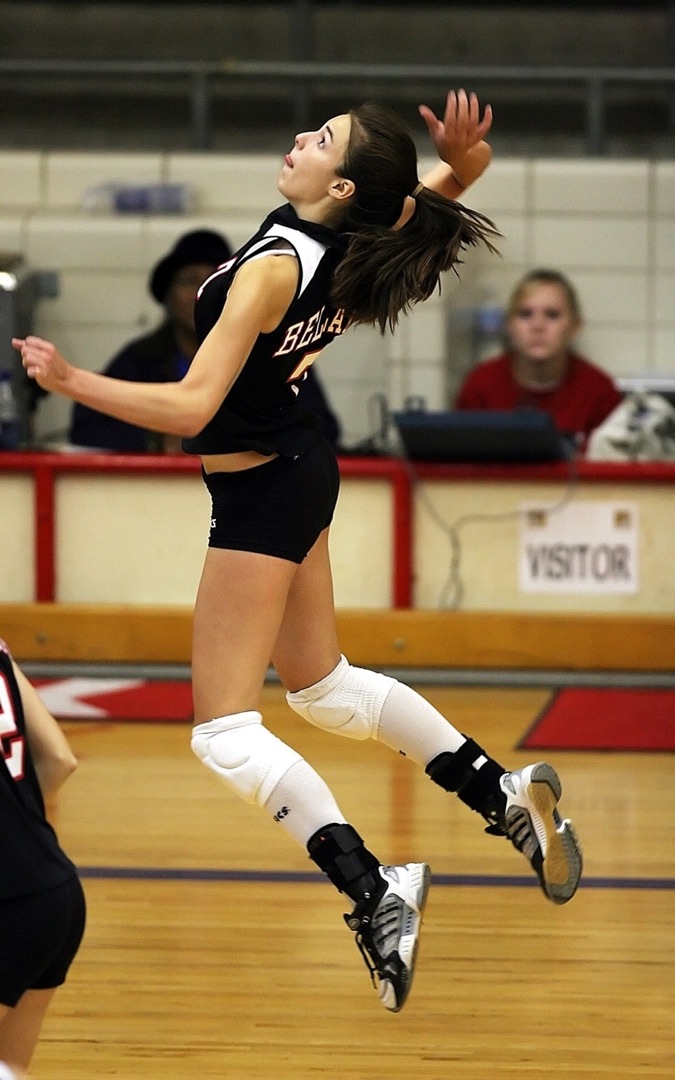
Volleyball Injury Prevention, Weight Training, & Conditioning for Youth & All Ages. Jump Higher, Hit Harder, Stay Injury Free!
Youth Volleyball Players Face Such
High Risk To Injury
The Statistics
Approximately 347,395 volleyball injuries occurred in adolescents between 2013 and 2022, with the median age of patients being 15 years old. In a study from 2018, 1,876 volleyball players at an average age of 16.2 participated in a 7-day tournament — 101 injuries occurred over those 7 days. Volleyball accounts for approximately 133,000 emergency room visits per year in the United States, with the majority involving female athletes under 18.
What you're missing
Only 27% of children ages 6–17 meet the CDC's recommended 60 minutes of daily physical activity, with girls consistently falling below boys across every age group. This is only accounting for general physical activity, meaning even more children are missing out on the strength, mobility, stability, and flexibility they need to prevent injury and improve their overall health. Proper strength training can reduce sports injuries by up to 66% and overuse injuries by 50%.
Closing the Gap
According to USAV, 80% of youth volleyball players in the US are female, yet female athletes are 2–8x more likely to tear their ACL than male athletes in the same sport. Studies from the CDC show women consistently participate in strength and weight training at significantly lower rates than males across all age groups. Female volleyball players ages 13–18 have one of the highest ACL and overuse injury rates in youth sports, yet less than 25% of club volleyball programs include any mandatory strength training component.
The Mental Game
75% of women and girls report feeling judged or intimidated in gym settings, with teenage girls reporting the highest levels of gym anxiety of any demographic. Teenage girls cite lack of confidence, intimidation, and lack of female-focused programming as the top 3 reasons they avoid the gym. Children as young as 6 experience what researchers call "movement shame" — the fear of looking silly, weak, or different while exercising.
Don't Give Up
70% of children quit organized sports by age 13, citing lack of fun, pressure, burnout, and feeling like they aren't good enough. The average age a child quits sport entirely has dropped from 15 to just 11 years old over the last decade. Girls drop out of sports at 2x the rate of boys, starting as early as age 10, often due to lack of proper strength training and confidence. By age 14, girls are dropping out of sport at the highest rate of any demographic.
"Girls who quit sports before 16 are 3x more likely to be inactive for life. Also 2x more likely to struggle with depression and anxiety as adults. Early intervention is everything."
A Program Built The Right Way
For You Or Your Child
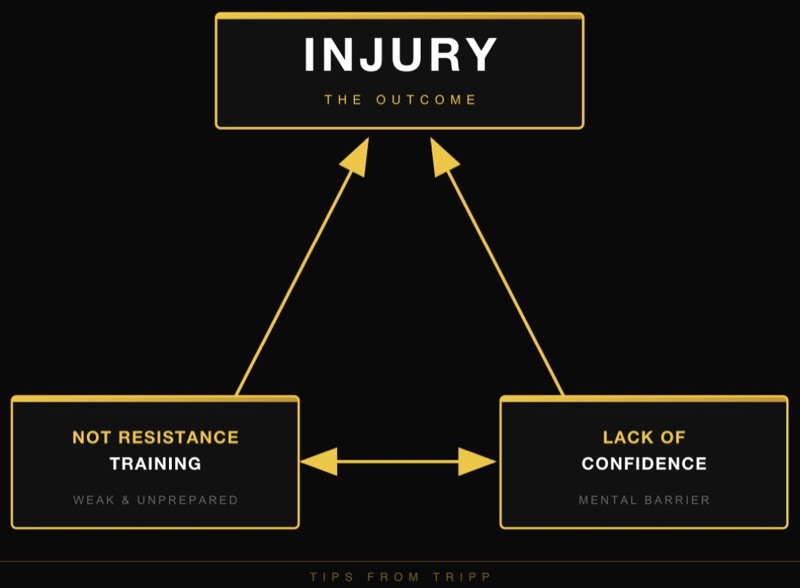
The Correlation
The solution was in the weight room all along — hover to learn more.
The Benefits
The benefits of resistance training on mental & overall health — hover to learn more.
The Myths
Common misconceptions about youth strength training — debunked — hover to learn more.
The Right Program
What a proper youth volleyball training program actually looks like — hover to learn more.
"The right program doesn't just prevent injury — it unlocks the athlete you were meant to be."
Trained. Certified.
Backed By Science.
Every program I build is grounded in exercise science and backed by research. Below are my ISSA certifications and the studies behind the methods I use.

Certified Personal Trainer
Foundational certification in personal training, program design, and exercise science.
Certified Nutritionist
Advanced nutrition coaching for optimizing athletic performance and body composition.
Strength & Conditioning Coach
Specialized programming for sport-specific strength, power, and conditioning development.
Bodybuilding Specialist
Advanced hypertrophy programming, periodization, and physique development methodologies.
Corrective Exercise Specialist
Assessment and correction of movement dysfunctions to reduce injury risk and improve performance.
CPR & AED Certified
American Heart Association certified in cardiopulmonary resuscitation and automated external defibrillator use.
Orthopedic Reviews — Volleyball-Related Injuries in Adolescents: A Decade of Data
PubMed — Study on Youth Strength Training Outcomes
NCAA — National Collegiate Athletic Association
USA Volleyball
CDC — Physical Activity Guidelines
Sport England — Research & Insights
American Orthopaedic Society for Sports Medicine (AOSSM)
British Journal of Sports Medicine
NSC — Injury Facts
Women's Sports Foundation
Aspen Institute — Project Play
National Alliance for Youth Sports (NAYS)
Journal of Adolescent Health
Human Kinetics Journals
American Psychological Association (APA)
Journal of Sports Science & Medicine
International Journal of Sports Physiology and Performance
National Eating Disorders Association
American Heart Association Journals
ACSM — Medicine & Science in Sports & Exercise
International Journal of Sports Physical Therapy (IJSPT)
American Council on Exercise (ACE)
American Academy of Pediatrics (AAP)
Position-Specific Training
Built Around How You Play
Every position on the volleyball court has unique physical demands. These programs are built around those demands — not generic templates.
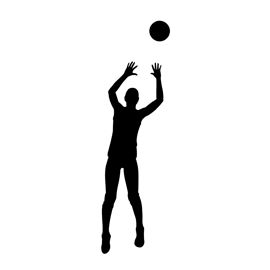
Setter
The setter touches the ball more than any other player — requiring elite wrist stability, shoulder endurance, footwork speed, and court vision.
- Reactive Footwork & Lateral Quickness
- Wrist & Forearm Strength & Stability
- Shoulder Rotator Cuff Endurance
- Single Leg Stability For Jump Sets
- Core Rotational Power For Back Sets
- Hip Mobility For Low Setting Positions

Outside Hitter
The outside hitter is the most physically demanding position on the court — requiring the highest combination of explosive power, shoulder strength, arm swing speed, and aerial body control.
- Maximum Vertical Jump Development
- Explosive Hip & Glute Power
- Shoulder Complex Strength & Stability
- Arm Swing Mechanics & Speed
- Landing Mechanics & Knee Stability
- Lateral Transition Speed

Middle Blocker
The middle blocker requires the most explosive short-distance speed, vertical power, and upper body blocking strength of any position — combined with the most frequent jump volume per set.
- Maximum Explosive Power From A Standing Position
- Short Lateral Shuffle Speed & Reaction
- Blocking Hand & Wrist Positioning Strength
- Hip Flexor & Quad Power For Fast Approach Jumps
- Neck & Upper Trap Strength For Blocking Contact
- Deceleration & Landing Control
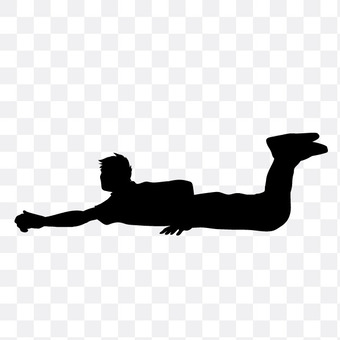
Libero & DS
The libero is the defensive specialist — requiring elite floor speed, reaction time, diving mechanics, and low center of gravity stability that no other position demands.
- Hip Mobility & Deep Squat Stability
- Lateral Explosion & Reaction Speed
- Dive & Roll Mechanics — Wrist, Shoulder & Hip Protection
- Low Back & Core Endurance For Sustained Defensive Posture
- Ankle Stability & Proprioception
- Neck & Shoulder Strength For Diving Contact

Opposite Hitter
The opposite hitter mirrors the outside hitter physically but adds unique right-side blocking demands and back-row attack mechanics that require specific training attention.
- Right-Side Approach Power & Mechanics
- Back-Row Attack Jump Development
- Cross-Body Arm Swing Strength
- Mirror Image Blocking Footwork
- Shoulder Internal & External Rotation Balance
- Single Leg Landing Stability From Back-Row Attacks
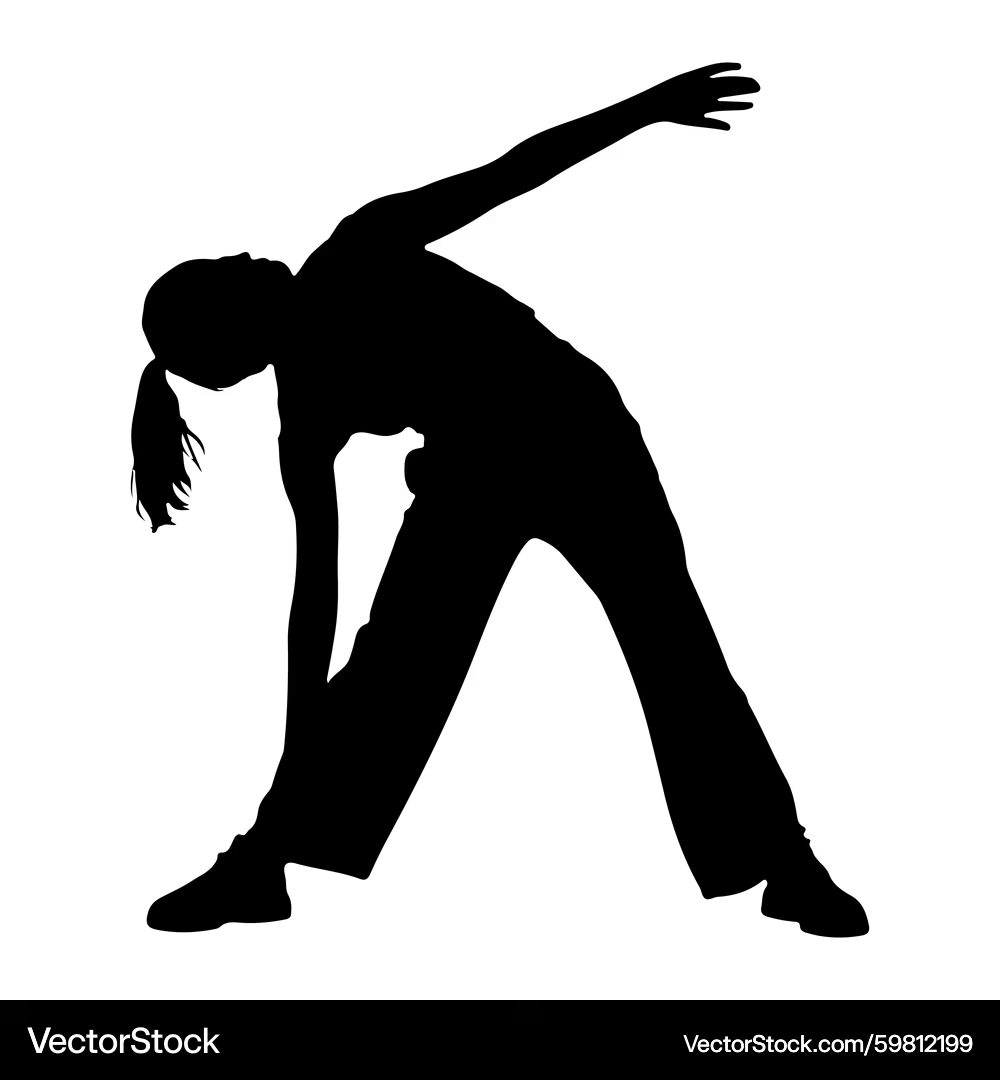
Warm-Up Protocol
The most skipped part of training — and the most important. A structured dynamic warm-up reduces injury risk by up to 50% and improves performance output by 10–15%.
- Dynamic Movement Prep
- Glute & Hip Activation
- Shoulder & Rotator Cuff Priming
- Nervous System Activation
- Joint Mobility Sequence

Training By Age
The same principles, applied differently. A 12-year-old is not a 17-year-old. Programming is scaled to physical maturity, growth plate status, and competitive level.
- Ages 6-12: Movement Foundations
- Ages 13–16: Progressive Overload
- Ages 17+ : Full Strength & Power
- Individualized Assessments

Personal Training
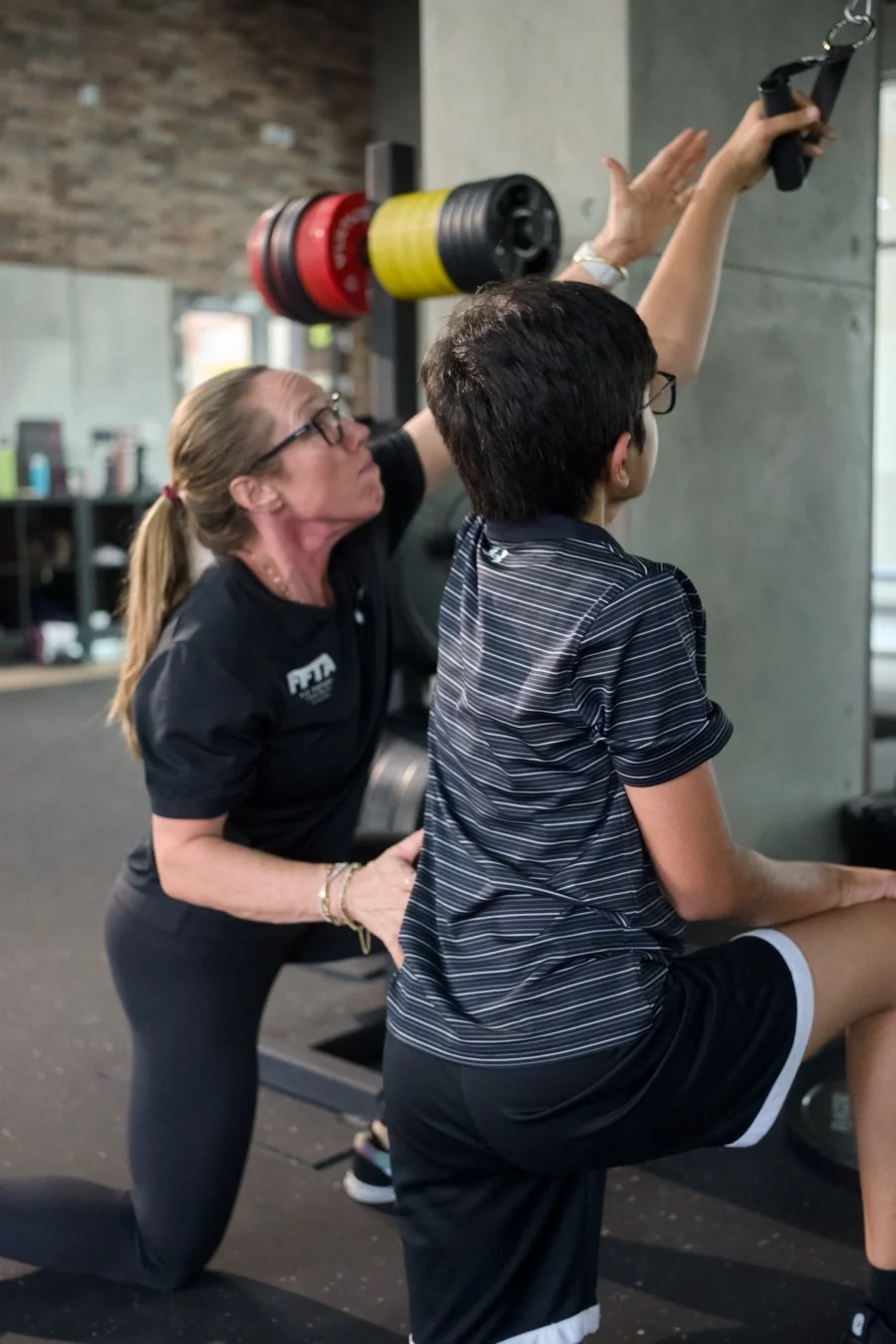
You don't have to play volleyball to train with me. My personal training programs are built for anyone ready to get stronger, move better, and feel more confident — at any age and any fitness level.
- 1-On-1, Couples, & Group Sessions
- In-Person & Online Options
- Strength & Conditioning
- Nutrition Guidance
- Bodybuilding
"A generic program builds a generic athlete. Your position demands more than that."
Get In Touch.
Let's Build Something.
Ready to train smarter? Fill out the form below and I'll get back to you as soon as possible.
The Trainer
Behind The Training.
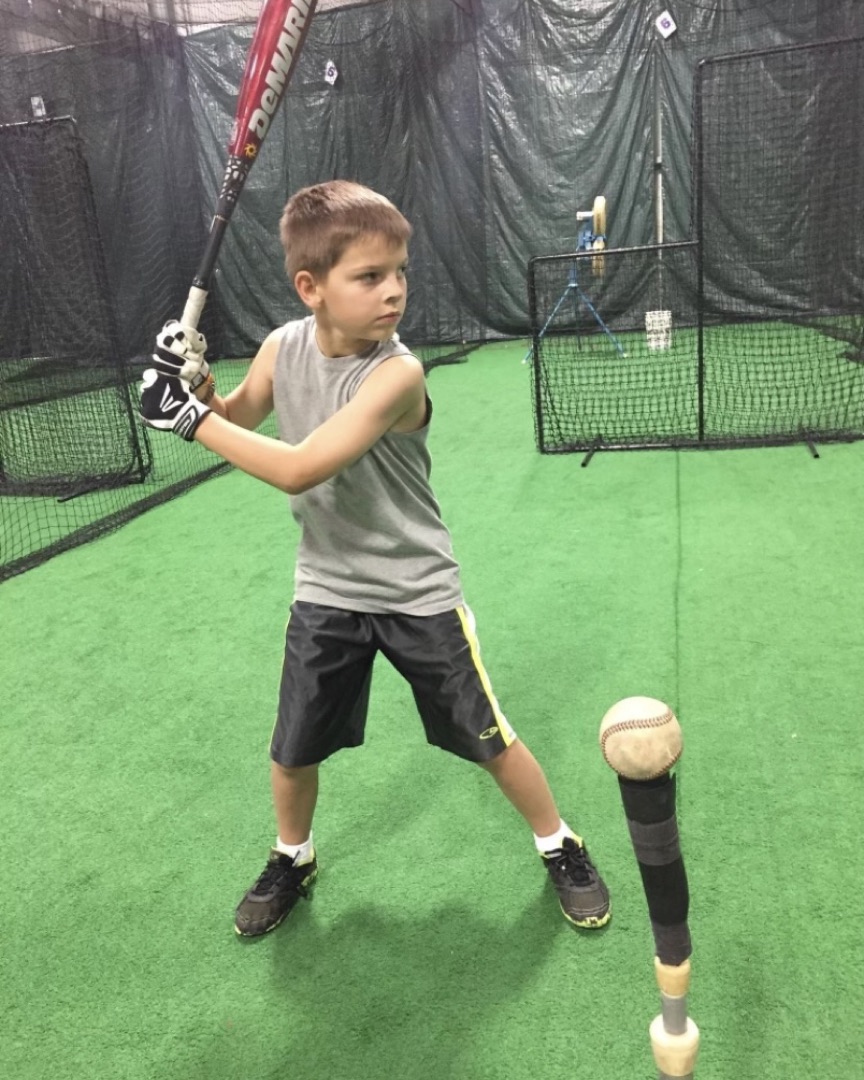
2018 less than 100 lbs
The best time to plant a tree was 20 years ago. The second best time is today.
If there's one thing I wish I could change about my own journey, it's that I didn't start sooner. Five years of lifting, fifteen years of playing and training in sports, and every single day I think about how different things could have been if I wouldve began my journey way earlier. There's an old chinese proverb that says, The best time to plant a tree was 20 years ago. The second best time is today. That quote lives at the center of everything I do. It's why I show up. It's why I built these programs. And it's why I'm so committed to making sure your athlete doesn't have to look back with that same wish.
Growing up, I was always the smallest kid in the room — and I mean always. I got held back a grade when I was young, which meant I was already behind emotionally, and being the shortest and lightest in every class on top of that hit my confidence hard. I remember feeling like my body was working against me, like no matter what I did, I just couldn't keep up. That insecurity was real, and it stayed with me for a long time. That experience is exactly why I'm so passionate about youth strength training done right. I know firsthand what it feels like to be a kid who doesn't feel comfortable in their own skin — and I know how transformative it can be when a young athlete finally starts to feel strong, capable, and confident. Teaching kids to train safely isn't just about building muscle; it's about building belief in themselves. If I can help even one kid avoid the years of self-doubt I carried, that's everything to me.
I grew up in South Bend, Indiana — a city that taught me toughness, community, and the value of hard work from a young age. Eleven years ago I made the move to Missouri, and this state has become home in every sense of the word. My love for the outdoors runs deep — you'll find me fishing or hunting every chance I get, staying active and connected to the world outside the weight room. That love for movement, nature, and staying physically sharp has always been a part of who I am — long before I ever touched a barbell.
But my relationship with training hasn't always been easy — and that's something I want every parent and every young athlete to hear. When I was younger and playing baseball, I used to constantly complain about my feet hurting. Every practice, every game — the pain was real and it was relentless. For a long time people thought I was making excuses. Coaches, teammates, even people close to me assumed I was just trying to get out of working hard. I wasn't. We eventually discovered I had PDS — a lower-body postural dysfunction where tight hip flexors and calves cause the feet to flatten excessively (overpronation), knees to knock inward, and hips to rotate internally. Suddenly everything made sense. What followed was six months of physical therapy and a daily commitment to stretching that never really ended. To this day I still have to maintain that routine. Static stretching, dynamic mobility work, intentional recovery — these aren't extras in my life. They are necessities.
That experience changed how I see every young athlete who tells me something hurts. I believe them. I know firsthand what it feels like to have a real physical limitation that nobody can see — and to be dismissed because of it. It's also why dynamic and static stretching are non-negotiable pillars of every single program I build. Not as an afterthought. Not as a five minute formality at the end of a session. But as a genuine, science-backed foundation for long term health and performance. I lived the consequence of not having that foundation early enough — and I made sure every program I build protects your athlete from that same path.
Coaching and training has never felt like work to me — it has always been a calling. That passion didn't come from nowhere. My father coached for 18 years, and watching him pour himself into the development of young athletes shaped everything about how I approach this work. The patience, the dedication, the genuine investment in every individual — I saw what that looked like up close for my entire childhood. I carry that with me into every single session.
Over the past year of personal training and coaching I have had the privilege of working with athletes and individuals of all ages, backgrounds, and goals — and I can honestly say there is nothing I love more than watching someone discover what they are truly capable of. People who know me will tell you I have a big heart. They will also tell you I might talk a little too much — and honestly, they're not wrong. But that's because I genuinely love people. I love their stories, their goals, their struggles, and their breakthroughs. Every conversation matters to me. Every athlete matters to me. Every family that trusts me with their child matters to me more than I can put into words.
Whether you are a parent looking for someone you can truly trust with your young athlete, a kid wondering if this whole training thing is actually for you, or an adult ready to finally invest in yourself — I want you to know something. You are in the right place. I built this for you. And I promise to show up for you the same way I wish someone had shown up for me.
— Tripp Bailey
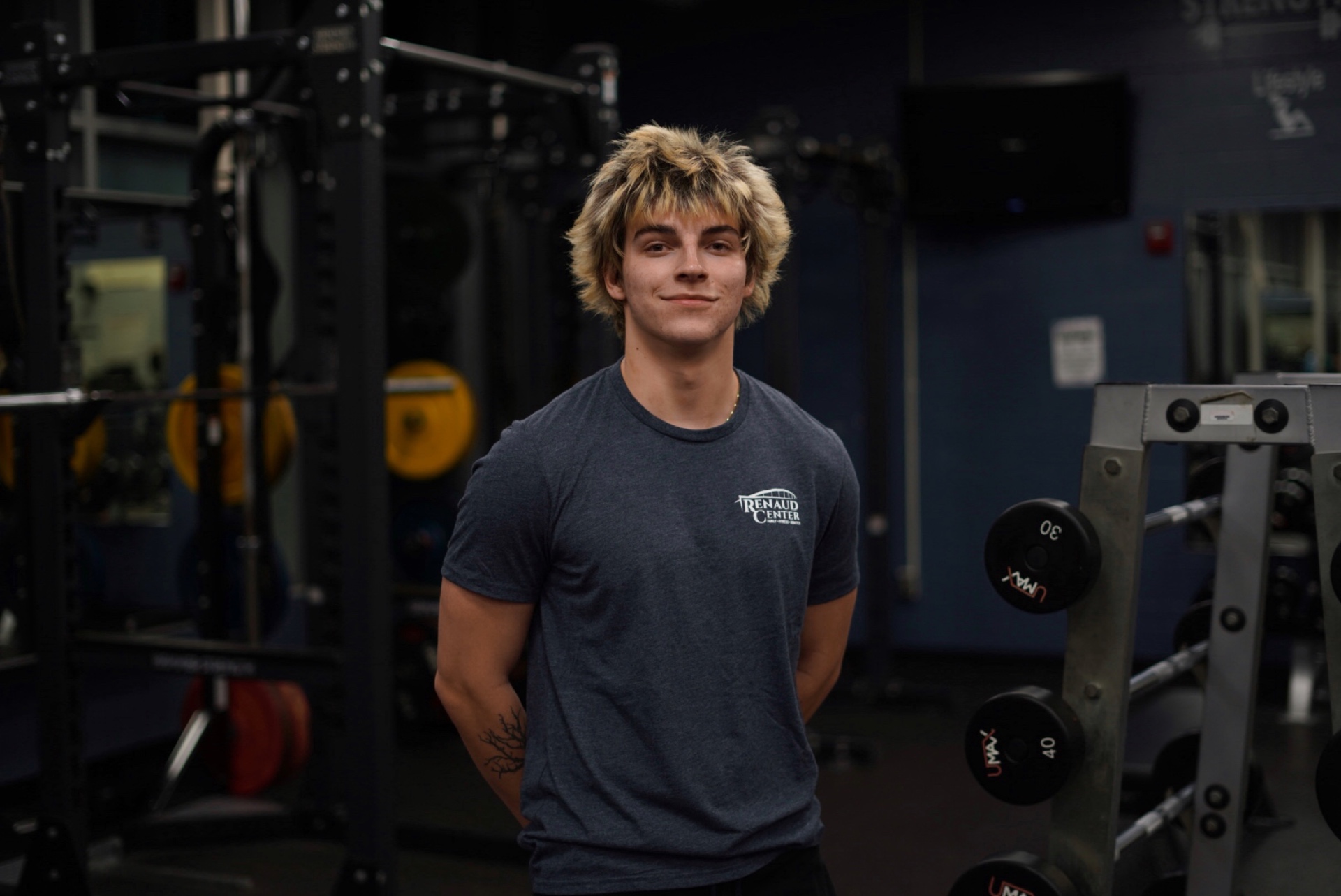
Personal Trainer | Volleyball & Youth Strength Coach | South Bend Raised | Missouri Made